Please note: This post contains affiliate links. If you click on any links in this post, or use the discount code provided, I will earn a commission.
This year I returned to marathon training after about 4 years of not really training/running shorter distances. Getting back to covering the longer distances has been an enjoyable experience. I have, however, found the trend towards maximalist shoes that seems to have exploded in my time away to be interesting and at times frustrating.
As someone who likes a lower, firmer shoe, I’ve found it difficult to find a training shoe I like and even harder to find a racing shoe.
I was keen to use a non-carbon-plated racing shoe as I wanted to more accurately gauge where I am now compared to a few years ago so I began searching for a “traditional” long distance racing flat. The joke was on me because, apparently, they no longer exist. I eventually chose a pair of Adidas Adios 9s. Most of the reviews recommended this shoe for 5-10k races. I say “rubbish” to those recommendations; it performed well in my marathon, and I’d have been happy to race 100ks in it back in the day.
Bear with me this is not a shoe review….
All this got me thinking about conditioning our feet for running.
Is the current maximalist trend a reflection of our expectations that nothing should hurt during the early stages of our running journey (or even the early part of a training block)? Are sore feet always a bad thing?
What if the initial discomfort we might feel when running in less cushioned shoes (or no shoes at all) is part of an inbuilt protective mechanism that slows us down and stops us from doing too much too soon? What would happen if instead of opting for more cushioning, we accepted our current limits and allowed our bodies to gradually adapt to the rigours of running with less protection?
Barefoot/minimalist training is something I used to incorporate regularly into my training. A few years ago, during the “barefoot running boom” I would regularly run up to 20 km in these barefoot sandals.
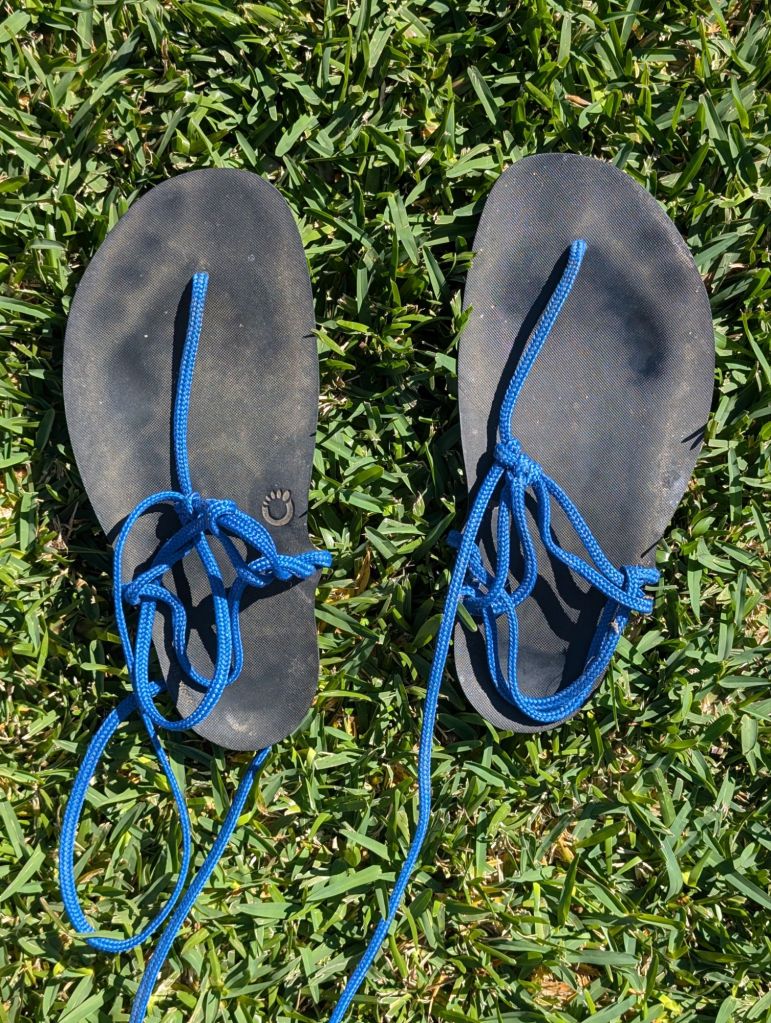

They came as a DIY kit from a company called Xero Shoes
https://www.xeros.com.au/?ref=Bodyofwork.fitness
and I had a lot of fun punching out the holes for the laces and learning to tie the required knots.
I’ll be reintroducing semi-barefoot running into my training over the coming weeks with the goal of building to about 15-20km twice a week in a slightly updated version of these sandals.
I am curious to find out:
How much barefoot running I can handle initially,
If any weaknesses in my form show up
If I notice any improvements in strength and speed.
I’ll try to post regular updates about my progress.

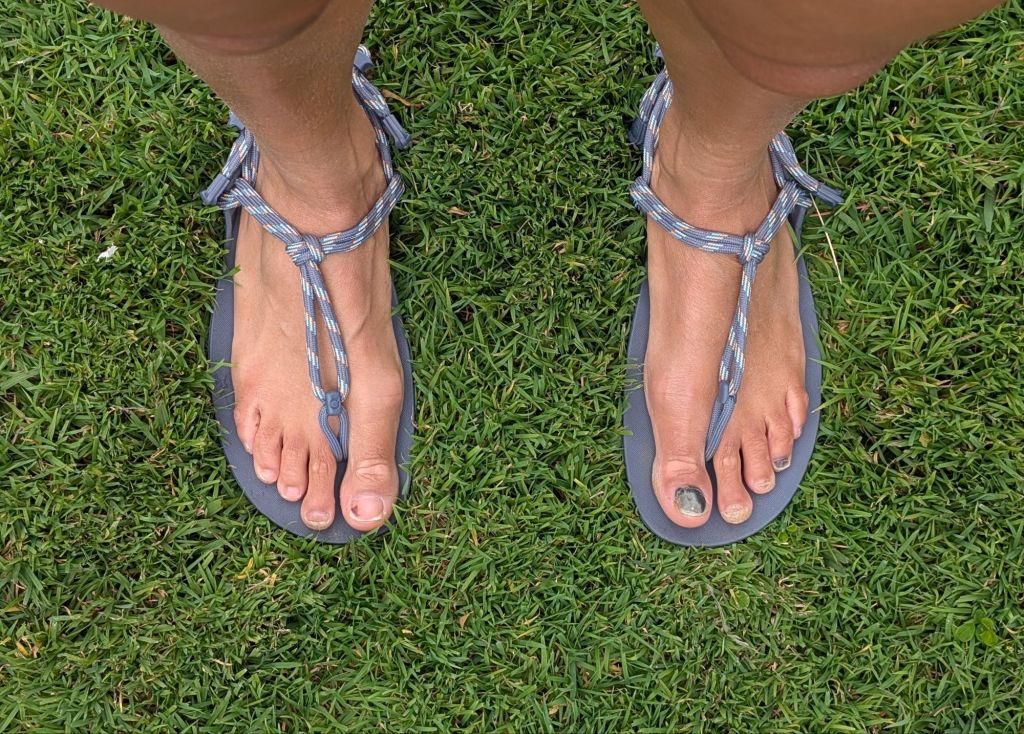
If any readers are keen to give Xero sandals a go here’s the link again: https://www.xeros.com.au/?ref=Bodyofwork.fitness
Use discount code Bodyofwork10 for 10% off your order.
 Body of Work
Leave a comment